
Generative Design
1 paper
Generative design workflows turn component creation into a constrained engineering search rather than a linear modeling task. By combining topology optimization algorithms, algorithmic geometry generation, load simulation, and material property mapping, engineers can explore broad solution spaces and compare weight, stiffness, fatigue behavior, and manufacturability before committing to a detailed model. The value is iterative optimization at scale: many candidate forms can be tested against the same boundary conditions, revealing designs that conventional drafting would rarely put on the table.
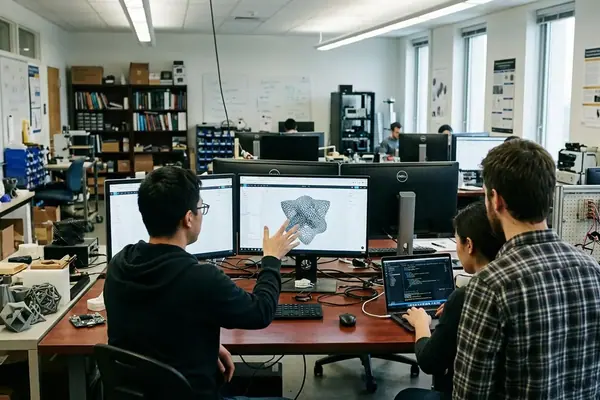
Useful results depend on the quality of the engineering inputs. Boundary conditions that simplify a bracket too aggressively can produce elegant but misleading geometry, while additive manufacturing constraints that arrive late often force extensive remodeling. Treat the algorithm as a collaborator with a narrow job: it searches, but the engineer decides which constraints are real, which assumptions are conservative, and which surfaces must survive downstream inspection, machining, or certification review.
This category focuses on advanced component workflows where simulation fidelity, mesh control, and manufacturing translation matter as much as the generated shape. The strongest projects usually keep optimization, verification, and geometry cleanup close together, so the final part remains traceable to the loads and materials that shaped it.